
Tiger Safaris in Bandhavgarh
The Complete Guide to India’s Tiger Capital
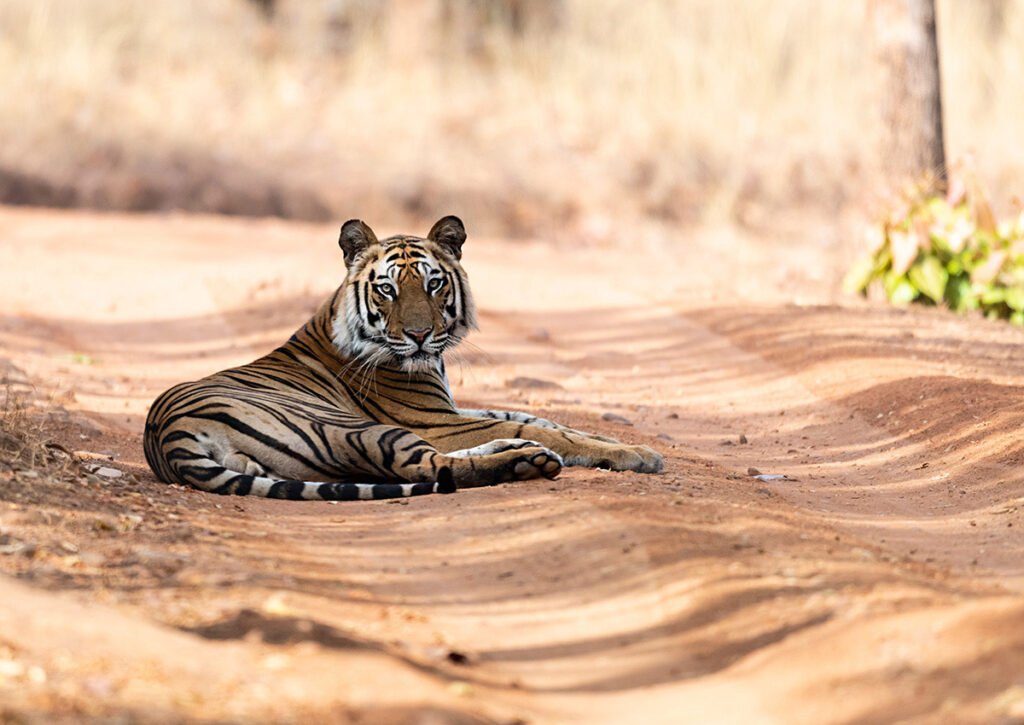
Bandhavgarh has a single, unambiguous claim to fame: it has the highest density of Bengal tigers of any national park in India. Possibly in the world. This is not marketing language — it is ecology. A core area of roughly 105 square kilometres supporting a resident tiger population that has, at various counts, numbered more than 60 individuals across the full reserve means that a safari here carries a sighting probability that no other park in the subcontinent can reliably match.
For the wildlife traveller asking where in India they are most likely to see a wild tiger, the answer has been Bandhavgarh for decades. This guide covers everything you need to know to plan a safari there — zones, vehicles, timing, booking, wildlife, and the conservation story behind one of the great rewilding successes of the modern era.
Why Bandhavgarh Stands Apart
Madhya Pradesh is sometimes called the tiger state of India, home to more tigers than any other Indian state. Within that state, Bandhavgarh is the crown jewel. The park sits in the Vindhya hill range in the Umaria district and covers a total area of around 1,536 square kilometres, including core and buffer zones. The terrain is dramatic — steep ridges, sal and bamboo forests, open meadows, and the remains of ancient human settlement including the Bandhavgarh Fort, which legend holds was built by the god Ram and gifted to his brother Lakshman.
The sighting statistics are what draw people here. In peak season, experienced naturalists report tiger encounters on the majority of safaris in the core zones. Some guests see tigers on every single outing. This is extraordinary in the context of wildlife tourism globally — the Bengal tiger is a powerful, wide-ranging apex predator, not a predictable park attraction, and Bandhavgarh’s ability to deliver consistent encounters reflects both the density of its tiger population and the open nature of much of its terrain.
The park also has a tradition of producing legendary individual tigers. Sita, Charger, B2, and more recently the tigers of the Tala range, have been studied, named, and followed across generations by naturalists and researchers. Understanding individual tiger personalities and territories adds a narrative depth to Bandhavgarh safaris that turns wildlife watching into something closer to wildlife biography.
The Safari Zones
Bandhavgarh is divided into three core zones and several buffer zones. Each has a distinct character, and understanding them before you book makes a meaningful difference to your experience.
Tala Zone is the original and most celebrated zone in the park. It contains the richest mix of habitats — open meadows called maidans, dense sal forest, rocky hillsides, and the area around Bandhavgarh Fort itself. Tiger density here is the highest in the park, and the open terrain means sightings are frequently in clear, unobstructed conditions ideal for photography. The resident tigers of Tala are well studied and relatively habituated to vehicles. This is the zone to prioritise above all others. Permits for Tala sell out the fastest and should be booked the moment they are released.
Magdhi Zone lies to the south of the core area and offers a different experience — denser forest, more undulating terrain, and a slightly wilder atmosphere. Tiger sightings are good, and Magdhi is often less crowded than Tala, which can make for a more peaceful experience. Leopard sightings are comparatively more common here. For visitors doing multiple safaris, combining Tala and Magdhi sessions gives a rounded picture of the park.
Khitauli Zone connects the Tala and Magdhi areas and covers varied terrain including grasslands and forest. Tiger sightings occur with regularity, and the zone is particularly good for sloth bear. Less visited than the other two core zones, Khitauli can feel genuinely remote even when the park is busy elsewhere.
Buffer Zones — Panpatha, Dhamokhar, and others — surround the core areas and are open to safari vehicles on separate permits. Tiger sightings occur here but less predictably. The buffer zones are excellent for those seeking a wilder, less structured experience, and for birdwatching. They are also where individual tigers sometimes shift during territorial transitions, and experienced naturalists can track these movements with local knowledge.
The practical advice is simple: book Tala for your first safari, add Magdhi for your second, and consider Khitauli if you are staying for three days or more.
Safari Vehicles: Gypsy and Canter
As across most of Madhya Pradesh’s tiger reserves, Bandhavgarh operates two categories of safari vehicle.
The Gypsy is a six-seater open-top 4×4 jeep and the vehicle of choice for serious wildlife watching and photography. It is manoeuvrable, low to the ground, and quiet. Your naturalist guide can position it precisely at a sighting — angling for light, edging closer carefully, waiting at a waterhole for a tiger to emerge. Six passengers means the group is small enough to remain genuinely silent when it matters. For tiger sightings, silence often determines whether the animal stays or moves off. If your budget permits one upgrade on this trip, the Gypsy is it.
The Canter is a larger open-top vehicle carrying up to 20 passengers. It is the budget option and widely used by domestic tourist groups. It accesses the same zones as the Gypsy and tiger sightings from Canters are entirely common — the tigers of Bandhavgarh are sufficiently habituated that vehicle size matters less than in less-visited parks. However, the Canter is less nimble, produces more noise as a group, and allows less photographic freedom. For solo budget travellers or large family groups where cost is a priority, it is a perfectly reasonable choice.
Morning safaris depart at sunrise, typically between 5:30 and 6:30 AM depending on the season, and last approximately three hours. Evening safaris depart in the early to mid afternoon, generally between 2 and 3 PM, and also run for around three hours. Morning safaris are generally considered superior for tiger activity, as tigers are most mobile in the cool hours around dawn. Evening safaris can produce outstanding sightings near waterholes and in open meadows as the heat of the afternoon recedes.
Most serious wildlife visitors do both a morning and an evening safari on each full day of their stay, maximising time inside the park.
The Best Time to Visit Bandhavgarh
The park follows the same seasonal pattern as most of central India’s tiger reserves, opening in October after the monsoon and closing again in late June before the next monsoon arrives.
October and November mark the reopening. The forest is lush and green after the rains, the air is cool and clear, and migratory birds begin to arrive. Tiger sightings are somewhat lower in these months as the dense post-monsoon vegetation gives animals more cover, but the atmosphere is beautiful and the park feels fresh and alive. This is an underrated period for those who want a quieter, more contemplative experience.
December through February is the main tourist season. Temperatures are cool to cold, occasionally dropping to near zero at dawn in January — layers and a warm jacket are essential for early morning safaris. Tiger activity is good, the vegetation has thinned, and visibility into the forest improves significantly. The park is at its busiest during the Christmas and New Year period, and permits for Tala zone can be extremely difficult to secure. Advance booking is essential.
March through May is widely regarded as the best period for tiger sightings, and many seasoned wildlife photographers prefer April above all other months. The heat builds steadily from March onwards, reaching 42 to 45°C by May. As the temperature rises and the waterholes shrink, tigers must come to permanent water sources repeatedly throughout the day, and the thinning of vegetation means they are often spotted in completely open conditions. Sighting rates peak. The discomfort is real — early morning safaris are comfortable enough, but afternoons are brutal — but the wildlife spectacle is unmatched.
June is the final month before closure. Temperatures are extreme and the park closes in the last week of the month. Hardy visitors willing to accept the conditions can still have remarkable experiences, and the desperation of the dry season concentrates wildlife around the remaining water in a way that produces genuinely dramatic encounters.
The considered recommendation is this: if sighting probability is your primary objective, visit between March and May. If a comfortable, rounded wildlife holiday is the goal, December through February is ideal. First-time visitors who can tolerate moderate heat are best served by late February or early March, when sighting rates are rising, temperatures are manageable, and the park is slightly less congested than the peak Christmas season.
How to Book Safari Permits
Bandhavgarh safari permits are managed through the Madhya Pradesh Forest Department’s online booking portal, and this is where the vast majority of permits are allocated and sold. The system opens bookings a set number of days in advance — typically around 90 days for the next season and on a rolling basis — and popular slots in Tala zone during peak season sell out with remarkable speed.
The practical steps are as follows. Create an account on the MP Forest Department’s official tourism portal before you travel. Have the passport or Aadhaar details of every member of your group ready — every passenger in the vehicle requires a valid photo ID at the park gate, and foreign nationals must have their passport details registered at the time of booking. Decide in advance which zones and which sessions (morning or evening) you want, and be ready to book the moment slots open.
For Tala zone morning safaris between December and April, expect serious competition. Many experienced travellers set alarms and book at the precise moment permits are released. If you miss the initial window, check back regularly — cancellations do occur, and permits are returned to the pool. Checking in the 48 to 72 hours before your target date frequently reveals newly available slots.
Hotels and wildlife lodges near Bandhavgarh often have an allocation of safari permits as part of their operating agreements with the Forest Department. Booking your safari through your property can sidestep the online competition, particularly for guests staying multiple nights. Established wildlife lodges often have naturalists on staff who hold permits and can also advise on zone selection based on the most recent tiger activity. This insider knowledge — which tigers are active where, which meadow had a fresh pugmark that morning — is genuinely valuable and difficult to replicate independently.
A licensed naturalist guide is compulsory for all safaris and will be assigned to your vehicle. A good naturalist is not an optional upgrade — they are the difference between a safari where you occasionally spot something and one where you understand what you are seeing, anticipate where to look, and leave with a coherent narrative of the forest’s daily life. When booking through a lodge, ask about the specific naturalists available. The best ones have spent years in the same zone, know individual tigers personally, and read the forest like a text.
Safari fees consist of the vehicle entry fee, the per-person park entry fee, the naturalist fee, and in some cases a camera fee for professional equipment. These are paid separately from your lodge accommodation. The total cost for a Gypsy safari with six passengers is moderate by international wildlife tourism standards and represents reasonable value given the sighting rates.
Wildlife Beyond the Tiger
While tigers are the headline, Bandhavgarh sustains a rich and diverse wildlife community that adds texture and depth to every safari.
Leopard are present throughout the park and sightings, while less reliable than tigers, are reasonably common — particularly in the rockier terrain of the Tala zone hillsides and in the Magdhi zone forest. Leopards are typically more secretive than tigers and a good sighting, often of an animal resting in a tree or moving through broken cover, is a memorable encounter in its own right.
Sloth Bear are one of Bandhavgarh’s genuine highlights. The park has a healthy population and encounters are frequent — a shaggy, short-sighted bear tearing apart a termite mound at the roadside, utterly oblivious to vehicles three metres away, is both hilarious and oddly moving. Cubs riding on their mother’s back through the forest is one of the park’s iconic sights.
Gaur, the Indian bison, are the largest bovine in the world and Bandhavgarh has a sizeable population. Encountering a group of these massive animals in a forest clearing — each individual the size of a small car, the dominant bull’s muscular shoulders rising to nearly two metres — is a reminder that the tiger is not the only large animal worth watching in this forest.
Spotted Deer (Chital) and Sambar are everywhere and serve as the primary prey base for tigers. Watching the behaviour of deer provides some of the most reliable intelligence about tiger proximity — a frozen herd, ears pricked, staring into the tree line, is a signal that every naturalist reads immediately. Wild Boar are common and often entertaining, rootling through the undergrowth in family groups. Langur monkeys in the canopy act as another alarm system, their sharp calls alerting all forest animals — and attentive safari passengers — to a predator’s movement below.
The birdlife is outstanding. Over 250 species have been recorded. The Indian Roller, one of the most beautiful birds in Asia, is abundant along the forest edges. Crested Hawk-Eagle, Changeable Hawk-Eagle, and the massive Malabar Pied Hornbill are among the more striking sightings. Parakeets, bee-eaters, kingfishers, and drongos provide constant colour. In winter, migrant raptors pass through in numbers.
Reptiles deserve mention. Indian Rock Python are occasionally encountered, sometimes to dramatic effect near waterholes. Monitor Lizard are common and sizeable. Mugger Crocodile are present in the waterbodies.
Getting to Bandhavgarh
Bandhavgarh is located in the Umaria district of Madhya Pradesh and is accessible by rail, road, and air, though it requires more planning to reach than the more touristically developed Ranthambore.
The nearest railway station is Umaria, approximately 35 kilometres from the park’s main Tala gate. Umaria is connected to the main rail network and has services from Jabalpur, Katni, and other major junctions. From Jabalpur, a major hub with good connections to Delhi, Mumbai, and other cities, the journey to Umaria takes roughly two to three hours by train. Taxis and jeeps are available at Umaria station for the final leg to the park.
Jabalpur Airport is the most commonly used air gateway, approximately 165 kilometres from the park — around three to four hours by road. Jabalpur has direct flights from Delhi, Mumbai, and several other major Indian cities. Some visitors also fly into Raipur or Varanasi, both of which are roughly comparable in distance and driving time.
By road, Bandhavgarh is approximately 195 kilometres from Jabalpur, 237 kilometres from Rewa, and around 490 kilometres from Bhopal. The roads are generally reasonable, and private car hire from major regional cities is a popular option. The drive through the Vindhya hills as you approach the park is atmospheric in itself — dry teak forest, small villages, and a landscape that gradually shifts from agricultural plains to something wilder.
Many visitors combine Bandhavgarh with other Madhya Pradesh tiger reserves — Kanha is approximately 280 kilometres to the southwest, making a combined circuit entirely feasible for visitors with a week or more.
What to Pack
Neutral, muted clothing in earth tones — khaki, olive drab, tan, grey. Bright colours and white should be left at home. The goal is to reduce visual disruption inside the forest.
Warm layers for morning safaris between November and February. Dawn temperatures in January can approach zero Celsius, and an open jeep at speed amplifies the cold considerably. A fleece jacket and light down layer are not excessive.
Sunscreen, a wide-brimmed hat, and sunglasses for summer visits. The afternoon sun between March and June is intense, and even a shaded open vehicle offers limited protection.
Binoculars, ideally 8×42 or 10×42. Even experienced safari-goers who consider themselves primarily interested in tigers find that binoculars transform the experience — bird sightings, distant deer behaviour, and the ability to read animal body language across a meadow all depend on optics.
A camera with a telephoto lens. For tigers, a 400mm lens is the starting point for frame-filling shots. A 100–400mm zoom with image stabilisation is the practical choice for most travellers. Bring extra memory cards and batteries — there is no charging inside the park.
A dust cover for your camera and bag. The forest tracks, particularly in the dry season, are extremely dusty. Fine red laterite dust penetrates everything and will damage camera mechanisms if unprotected.
Water and light snacks. Safaris run for three hours and there are no facilities inside the core zones. Staying hydrated in the heat is genuinely important.
Your government-issued photo ID or passport — required at the gate for every passenger, without exception.
Conservation and the Tiger Recovery Story
Bandhavgarh’s current tiger success did not happen automatically. The park’s history is, like most Indian tiger reserves, a story of near-collapse followed by sustained recovery.
By the early 1970s, hunting and habitat loss had brought the Indian tiger population to a crisis point. The inaugural Project Tiger census in 1972 counted fewer than 1,800 tigers across the entire country. Bandhavgarh was designated a tiger reserve under Project Tiger in 1993, joining a network that today includes more than 50 reserves across India.
The results have been significant. India’s national tiger census now records over 3,000 wild tigers — the species’ population has grown consistently over the past two decades, a genuinely remarkable conservation achievement in the context of global wildlife decline. Bandhavgarh has been one of the flagship successes of this programme, its dense forest and protected core providing conditions in which tigers breed reliably and cubs survive to adulthood at comparatively high rates.
Tourism revenue plays a direct role in sustaining this. Permit fees, vehicle charges, naturalist fees, and the local economy built around wildlife lodges and safari infrastructure collectively generate the financial case for keeping tiger habitat intact. The communities surrounding Bandhavgarh — who might otherwise seek to convert forest to agriculture or extract timber — have economic stakes in the park’s continuation. This alignment of conservation incentive with local livelihood is imperfect and contested in places, but it is the working model for large carnivore protection across India.
Responsible behaviour on safari is not an abstraction. Remaining in your vehicle at all times, maintaining silence near sightings, not pressuring your driver or naturalist to approach animals more closely than is appropriate, and choosing operators who observe the rules rather than circumvent them — these choices collectively determine whether the safari industry in places like Bandhavgarh is a net benefit or a net harm to the ecosystem it depends on.
Planning Your Visit: A Summary
Bandhavgarh rewards visitors who plan methodically. Book Tala zone permits as far in advance as possible — months ahead for peak season, particularly December through April. Plan for a minimum of three to four safari sessions across your stay; two full days with morning and evening sessions each gives a realistic chance of multiple tiger encounters and a comprehensive experience of the park’s wildlife.
Arrive knowing which zones you are booked into and with some background on the resident tigers and their current territories — your naturalist will fill in the details on the ground, but arriving informed sharpens your observation and enriches every moment inside the forest.
Give the non-tiger wildlife the attention it deserves. A sloth bear family in the early morning light, a Gaur bull emerging from the teak at dusk, the alarming calls of a troop of Langur tracking a tiger through the canopy — these are not consolation prizes. They are the forest speaking, and Bandhavgarh speaks more clearly than almost anywhere else in India.
The tigers here are real, wild, and numerous. The forest is ancient. The experience, approached with patience and respect, is one of the most purely extraordinary things a traveller can do anywhere in Asia.
Keywords: Bandhavgarh tiger safari, Bandhavgarh National Park, tiger safari Madhya Pradesh, Bengal tiger sighting India, Bandhavgarh safari zones, Tala zone Bandhavgarh, best time to visit Bandhavgarh, Project Tiger India, wildlife safari central India, Bandhavgarh safari booking
Indulgence Amidst the Wilderness: Luxury Properties in Bandhavgarh
Taj Mahua Kothi, Bandhavgarh:
Nestled amidst sprawling grasslands and verdant forests, Taj Mahua Kothi offers a serene retreat in the heart of Bandhavgarh. Inspired by the traditional architecture of Central India, the lodge features luxurious cottages adorned with handcrafted furnishings and modern amenities. Guests can unwind in the lap of luxury, savoring gourmet cuisine prepared with locally sourced ingredients or indulging in spa treatments inspired by ancient Ayurvedic traditions. With personalized safari experiences led by expert naturalists, Taj Mahua Kothi promises an immersive journey into the wilderness of Bandhavgarh.
Samode Safari Lodge, Bandhavgarh:
Located on the outskirts of Bandhavgarh National Park, Samode Safari Lodge blends seamlessly with its natural surroundings, offering a tranquil escape from the chaos of urban life. The lodge’s elegant tented accommodations exude rustic charm, featuring luxurious amenities and private verandas overlooking the surrounding wilderness. Guests can embark on guided safaris to explore the park’s diverse ecosystems or indulge in cultural experiences, including visits to nearby tribal villages and ancient temples. With its commitment to sustainability and responsible tourism, Samode Safari Lodge offers discerning travelers a chance to reconnect with nature while minimizing their environmental footprint.
Kings Lodge, Bandhavgarh:
Immersed in the rustic beauty of Bandhavgarh’s wilderness, Kings Lodge offers a retreat of understated elegance and natural splendor. Surrounded by lush forests and tranquil water bodies, the lodge’s spacious cottages blend seamlessly with the landscape, providing a serene sanctuary for relaxation and rejuvenation. Guests can unwind amidst nature, indulging in delicious meals prepared with locally sourced ingredients or embarking on guided safaris to discover the park’s hidden treasures. With its eco-friendly practices and commitment to wildlife conservation, Kings Lodge offers guests a chance to experience the magic of Bandhavgarh while contributing to the preservation of its precious ecosystem.
Bandhavgarh’s tiger safaris offer a rare opportunity to witness the majesty of India’s wildlife in its natural habitat. Coupled with the allure of luxury properties that redefine indulgence, a journey to Bandhavgarh promises an unforgettable experience for discerning travelers. Whether seeking adventure amidst the wilderness or seeking solace in opulent retreats, Bandhavgarh beckons with its timeless charm and untamed beauty. Embark on a journey of discovery and luxury in the heart of India’s tiger country, where every moment is a testament to the magnificence of nature and the art of hospitality.