
Tiger Safaris in Tadoba
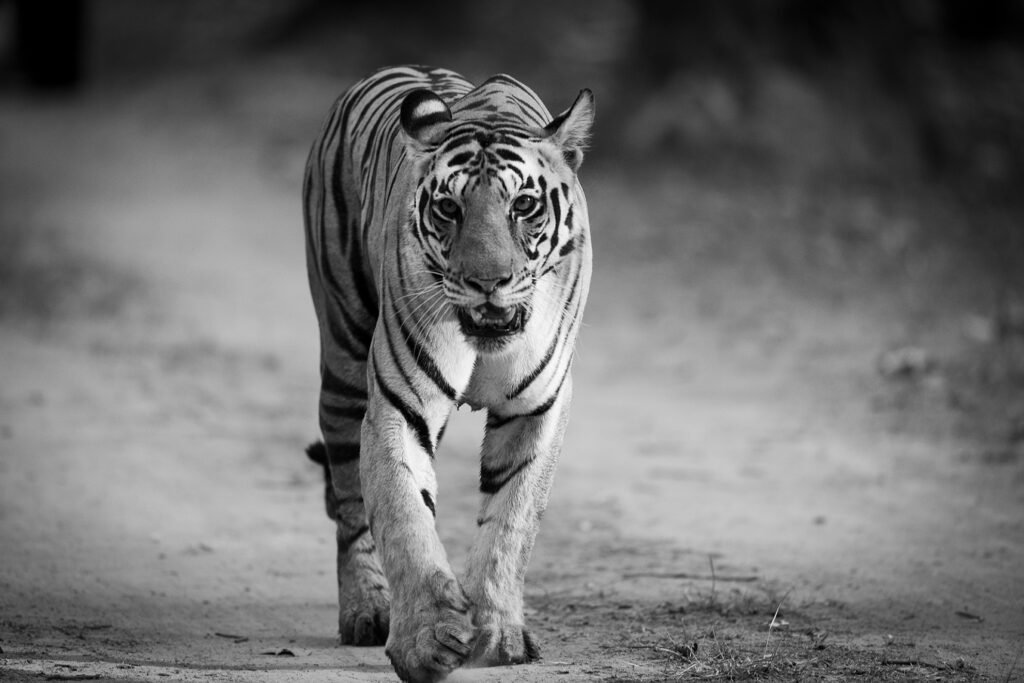
The Complete Guide to Maharashtra’s Wild Tiger Country
Tadoba does not have the international name recognition of Ranthambore or the superlatives associated with Bandhavgarh. What it has is something arguably more valuable: tigers in extraordinary numbers moving through open, dry teak forest in conditions that produce some of the most dramatic and sustained big cat sightings anywhere in India. Among Indian wildlife photographers and seasoned safari veterans, Tadoba has a reputation that borders on reverence. The word used most often is raw. This is tiger country that feels unpolished, unhurried, and genuinely wild.
Tadoba Andhari Tiger Reserve is located in the Chandrapur district of Maharashtra, in the eastern corner of the state known as Vidarbha. It is Maharashtra’s oldest and largest national park, and its tiger density rivals anything the more celebrated parks of Madhya Pradesh can offer. In recent years, tiger sighting rates here have been among the most consistent in the country, drawing a growing tide of serious wildlife enthusiasts who have moved beyond the obvious destinations and discovered what the insiders already knew.
This is a complete guide to planning your tiger safari in Tadoba — zones, vehicles, seasons, booking, wildlife, getting there, what to pack, and the conservation story that underpins it all.
Why Tadoba Deserves Its Reputation
Several factors combine to make Tadoba exceptional as a tiger safari destination.
The forest type is the starting point. Tadoba’s landscape is dominated by dry deciduous teak forest interspersed with dense patches of bamboo, open grassy clearings called maidans, and a network of lakes, streams, and seasonal waterholes. The teak forest, unlike the dense sal and bamboo jungles of some central Indian parks, allows relatively open sightlines. Tigers move through this landscape in conditions that give safari vehicles genuine opportunities to observe them at length, often in the open, sometimes for extended periods that allow behaviour watching rather than just fleeting glimpses.
The lake system is critical. Tadoba Lake, the central water body around which the original national park was established, is a reliable focus for wildlife activity, particularly in the hot season. Tigers come to drink, crocodiles bask on the banks, and the surrounding forest provides cover that tigers use between visits to the open water. The concentration of predator and prey around permanent water during April and May creates conditions for some of the most dramatic safari experiences in India.
The tiger population itself is the decisive factor. Tadoba Andhari Tiger Reserve — which combines the original Tadoba National Park with the Andhari Wildlife Sanctuary — covers approximately 1,727 square kilometres of core and buffer territory. The current tiger population is estimated at well over 100 individuals across the full reserve, with a significant concentration in the core zones. Population density in the core area is among the highest in the country.
Tadoba also has the advantage of being relatively less developed as an international tourist circuit compared to Ranthambore or Bandhavgarh. While domestic tourism is strong and growing, the international visitor numbers are lower, which means the atmosphere inside the park retains a quality that more commercially developed reserves sometimes lose.
Understanding the Safari Zones
Tadoba Andhari Tiger Reserve is divided into a core area and a surrounding buffer zone, with multiple entry gates providing access to different sections of the park. Understanding the gate system is the key to intelligent safari planning here, as the reserve’s geography is broader and more complex than a simple numbered zone system.
Tadoba Gate (Moharli) is the primary entry point into the core zone and the most consistently productive for tiger sightings. The terrain around Moharli includes Tadoba Lake, open clearings, and a mosaic of forest types that collectively provide ideal tiger habitat. This is the area with the highest documented sighting frequency, and for visitors with limited time, Moharli is the entry point to prioritise. Morning safaris departing from Moharli regularly produce tiger encounters, and the combination of the lake backdrop and open forest makes this area particularly rewarding for photography.
Kolsa Gate provides access to the southern section of the core zone and is renowned for exceptional tiger sightings in open terrain. Kolsa has developed a strong reputation over recent years, with some naturalists arguing it rivals Moharli for consistent encounters. The forest here is slightly more open in places, and the tigers of this area include several well-known individuals that have been studied and followed by local guides for years. For serious photographers and repeat visitors, Kolsa is often the preferred choice.
Navegaon Gate and Junona Gate are additional core zone entry points that access different sections of the park interior. Both produce tiger sightings and offer the advantage of lighter vehicle traffic than the principal gates. For visitors seeking a quieter, less crowded experience without sacrificing sighting probability, these gates are worth considering, particularly for second or third safaris.
Agarzari Gate and Pangdi Gate are buffer zone entry points. The buffer zone covers a vast area surrounding the core and supports a substantial tiger population — some individuals disperse from the core into the buffer, and recent years have seen strong sightings in buffer areas that were previously considered secondary. Buffer zone permits are cheaper, face less competition, and offer a genuinely wild experience. For multi-day visitors, combining core and buffer safaris provides a comprehensive picture of the reserve.
Zari Gate in the western buffer has developed a particularly strong reputation for tiger sightings in recent seasons. Tigers habituated to vehicle presence have been reported here with increasing frequency, and experienced naturalists operating from this gate produce excellent results. Do not dismiss the buffer zones as a lesser option — in Tadoba, the distinction between core and buffer is less absolute than in some other reserves.
The general recommendation is to prioritise Moharli or Kolsa for your first safaris, add Navegaon or Junona for variety, and consider a buffer zone session for a different perspective on the reserve.
Safari Vehicles
Tadoba operates the same two-vehicle system as most Indian tiger reserves.
The Gypsy, a six-seater open-top 4×4 jeep, remains the vehicle of choice. Its advantages in Tadoba are identical to those at other reserves — manoeuvrability, low profile, small group size, and the ability to position precisely at a sighting. In Tadoba’s open teak forest, where sightings often develop over extended periods as tigers move through clearings or along track edges, the Gypsy’s ability to reposition quietly is particularly valuable. A tiger walking along a forest path in the golden light of a Tadoba morning, with your vehicle keeping pace fifty metres behind in complete silence, is an experience that demands an open jeep.
The Canter, carrying up to 20 passengers, is available as a budget alternative and accesses the same areas. Given Tadoba’s relatively high tiger density, Canter sightings are entirely common. For cost-conscious travellers or larger groups, the Canter is a practical choice without the significant sacrifice that might apply in a lower-density park.
Both morning and evening safaris run daily throughout the season. Morning departures are typically between 5:30 and 6:30 AM depending on the month, with the earliest starts during the hottest months when dawn coolness is most precious. Evening safaris depart between 2:30 and 3:30 PM. The morning session is generally preferred for tiger activity, as cats are most mobile in the cool hours around dawn. Evening sessions in Tadoba are particularly productive near waterholes during April and May, when late afternoon heat breaks and tigers emerge to drink.
The Best Time to Visit Tadoba
Tadoba follows the seasonal rhythm of central India’s deciduous forests. The park closes during the monsoon months — typically mid-June to mid-October, though exact dates vary year to year — and reopens as the rains end and the forest begins to dry.
October and November are the reopening months. The vegetation is thick and green, the air cool and fresh, and the forest alive with post-monsoon energy. Tiger sightings are possible but more challenging as the dense growth provides plentiful cover. This is an excellent period for atmosphere, for birdwatching, and for those who want the park largely to themselves. Sighting rates are lower than in the dry season but by no means negligible.
December through February brings the peak tourist season. Temperatures are comfortable, the forest has thinned somewhat from the monsoon lushness, and wildlife activity is strong. Tiger sightings are good across all zones, leopard are active, and the mornings carry a chill that makes the warmth of a tiger sighting feel even more welcome. The Christmas and New Year period sees maximum visitor numbers and permit competition for the prime gates is intense. Book months ahead.
March through May is when Tadoba truly earns its reputation. This is the dry season, and in Tadoba the dry season is transformative. The teak trees shed their leaves, opening the forest canopy and creating visibility that can seem almost theatrical — long sight lines through amber-trunked trees, open clearings baking in the sun, and waterholes that shrink week by week, concentrating every animal in the reserve around the remaining water. Tigers are visible for extended periods. Encounters near Tadoba Lake and the smaller waterholes during this period can last thirty minutes or more as tigers drink, cool themselves, and rest in the open. April is the month most consistently cited by naturalists and photographers as the single best time to visit.
May is extremely hot — temperatures regularly exceed 45°C in Chandrapur district, which has the distinction of being one of the hottest places in India during the pre-monsoon period. The heat is genuine and should not be underestimated. Early morning safaris are manageable and beautiful. Afternoons are brutal. The wildlife, however, is extraordinary. Tigers spend the hottest hours near water, and an afternoon safari to a waterhole in late May can produce encounters of almost surreal intimacy as animals that would normally maintain cautious distance are simply too focused on cooling down to care about your vehicle.
June is the final month before closure and the most extreme. For the committed and heat-tolerant, the sightings can be exceptional. The park typically closes in the third week of June.
How to Book Safari Permits
Tadoba safari permits are managed through the Maharashtra Forest Department’s online booking system. Unlike some other states, Maharashtra’s system has developed reasonably well in recent years and permits can be booked online through the official portal with advance planning.
Permits are released on a rolling basis, with availability opening several weeks to a couple of months in advance depending on the gate and season. Moharli and Kolsa gates during the peak dry season — particularly March through May — are the most competitive. Permits for these gates and sessions should be booked as soon as they become available. Off-peak periods and buffer zone gates generally have more availability.
The booking process requires the photo ID details of every passenger in the vehicle at the time of reservation. Indian nationals can use Aadhaar, PAN, or a driver’s licence. Foreign nationals must use their passport. Arriving at the gate without the correct ID matching the booking will result in denied entry — this rule is enforced without exception.
Several wildlife lodges and camps near Tadoba hold permit allocations as part of their operating relationship with the Forest Department. Booking safaris through a lodge is often the most practical approach for visitors who want to avoid the stress of the online permit system, particularly for prime gates in peak season. Established properties with experienced naturalists on staff will also have current knowledge of tiger locations and activity — a naturalist who knows which tiger crossed which track that morning is providing intelligence that no online booking system can replicate.
A licensed naturalist guide is mandatory for all safaris. The quality of the naturalist is the single most variable factor in the safari experience. A great naturalist in Tadoba — one who has spent years learning the forest, knows the individual tigers by sight and behaviour, reads pugmarks, reads bird alarm calls, and anticipates where to look ten minutes before anything is visible — transforms a three-hour drive into an education. Ask about naturalist experience and local knowledge when booking through a lodge. In Tadoba, where the terrain and tiger territories are complex and multi-gated, this local expertise has particular value.
Photography permissions for professional equipment — tripods, long lenses above certain specifications — may require additional documentation and fees. Check the current requirements at the time of booking if you are carrying serious camera equipment.
Wildlife Beyond the Tiger
Tadoba’s wildlife community is rich, and the reserve’s biodiversity rewards attention beyond the headline species.
Leopard are present throughout the reserve but are secretive and sightings, while not rare, are less predictable than tigers. The buffer zones and forest edges in the early morning and late evening offer the best opportunities. A leopard in a teak tree at dawn in Tadoba is one of the park’s most sought-after sightings.
Sloth Bear are common and one of Tadoba’s genuine wildlife highlights. The park has a large population and encounters are frequent — often startlingly close, as bears tend to be absorbed in whatever they are excavating and oblivious to vehicles until the last moment. Mother bears with cubs on their backs are seen regularly through the season.
Gaur, the Indian bison, are abundant in Tadoba and the herds here are among the largest and most impressive in any Indian reserve. Groups of twenty or more animals, dominated by enormous bulls, are not uncommon in the forest clearings. Gaur and tigers interact at close range in Tadoba more than in most parks — watching a tiger navigate around a herd of gaur, and the herd’s tense, collective calculation of threat versus escape, is one of the most extraordinary behavioural spectacles the park offers.
Wild Dog (Dholes) are present in Tadoba and sightings, while not guaranteed, do occur. A pack of dholes in full pursuit is arguably the most electrifying wildlife encounter the Indian forest offers — fast, cooperative, and completely relentless. If your naturalist reports dhole activity in the park during your visit, that information should reorganise your safari priorities immediately.
Sambar, Spotted Deer (Chital), Nilgai, and Four-horned Antelope are common prey species. Nilgai — the large, somewhat ungainly blue bull antelope — are particularly abundant in Tadoba and conspicuous in the open forest. Wild Boar are everywhere. Langur monkeys in the canopy provide the forest’s alarm network.
The reptile life is excellent. Mugger Crocodile are present in Tadoba Lake and the waterways in substantial numbers. Indian Rock Python are encountered with reasonable frequency. Monitor Lizard are common throughout the forest, often spotted basking on rocks or tracks in the morning sun.
The birdlife is outstanding. Indian Roller, Crested Serpent Eagle, Changeable Hawk-Eagle, and the spectacular Grey-headed Fish Eagle are among the more arresting species. Malabar Pied Hornbills are heard before they are seen — their enormous bills and raucous calls make them hard to miss once encountered. Painted Stork, Open-billed Stork, and various kingfisher species frequent the lake and waterways. Over 195 species have been recorded.
Getting to Tadoba
Tadoba is located in Chandrapur district in eastern Maharashtra, and while it requires more travel effort than some of the better-known reserves, it is entirely accessible by a combination of rail and road.
The most practical approach is to fly to Nagpur, which has good domestic connections from Delhi, Mumbai, Pune, Hyderabad, and other major cities. Nagpur airport is approximately 140 to 150 kilometres from the park gates — roughly two and a half to three hours by road. Taxis and pre-booked transfers are readily available from the airport.
Chandrapur, the nearest major town to the park, is approximately 45 kilometres from the main Moharli gate. Chandrapur is connected to the rail network with services from Nagpur (around two hours) and from other regional cities. From Chandrapur, local taxis and auto-rickshaws provide onward transport to the various gate areas.
By road, Nagpur to Chandrapur is a well-maintained four-lane highway for much of the route, making the drive straightforward. Many visitors hire a car from Nagpur airport for the duration of their stay, which provides flexibility for reaching different gates and for day trips. The drive itself passes through the dry Vidarbha landscape — flat agricultural country gradually giving way to forest as you approach the reserve.
From Mumbai, the journey is approximately 750 kilometres and best covered by overnight train to Chandrapur or by flying to Nagpur and driving. From Pune, the road distance is approximately 900 kilometres. Tadoba is not a quick weekend trip from Maharashtra’s major cities, but the return on the investment of travel time is considerable.
What to Pack
Neutral-coloured clothing in earth tones — khaki, olive, tan, dark green. Safari vehicles in Tadoba are open and you are visible to the forest. Bright colours and white clothing disrupt the environment and are discouraged. Most serious wildlife enthusiasts wear the same muted tones as a matter of habit rather than instruction.
Warm layers for morning safaris between November and February. The Vidarbha region can be genuinely cold at dawn in January, and wind chill in an open moving vehicle compounds the effect significantly. A fleece jacket and a light windproof layer are sensible.
Sun protection for the dry season — a wide-brimmed hat, high-factor sunscreen, UV-protective sunglasses, and a light long-sleeved shirt that covers the arms. The sun in Tadoba between March and June is relentless and the open vehicle provides no shade.
Binoculars of 8×42 or 10×42 quality. In Tadoba’s open forest, binoculars are particularly valuable for reading the body language of distant tigers, for scanning forest edges, and for the excellent birdwatching. Do not leave them at home in the belief that tiger sightings at close range will make them unnecessary — the moments when you most want binoculars are precisely the moments you didn’t anticipate.
A camera with a telephoto lens. In Tadoba’s open conditions, focal lengths of 400mm or more allow frame-filling shots of tigers at the distances typically maintained. Image stabilisation is highly desirable in the variable light of early morning and late afternoon. A wide-angle lens for landscapes and context shots is also worthwhile — the teak forest at dawn in April is beautiful in its own right and deserves documentation.
Dust protection for all camera equipment. The tracks in the dry season generate considerable dust, and laterite soil is fine enough to penetrate camera bags, lens mounts, and card slots. A sealed bag or dust cover is essential rather than optional.
Adequate water for the duration of each safari. In the hot season, three to four litres for a morning session is not excessive. Dehydration in the heat is a genuine risk and impairs enjoyment considerably. Light snacks are also practical — three hours in a Gypsy in April, however exciting, is a long time without sustenance.
Your government-issued photo ID or passport at all times.
Conservation: Tadoba’s Tiger Recovery
Tadoba’s current tiger abundance is the product of decades of protection effort, some of it heroic, undertaken against persistent pressures from one of India’s most heavily industrialised regions. Chandrapur district contains significant coal deposits and is home to major thermal power plants and related infrastructure. The reserve exists in a landscape that is actively contested between conservation and extraction, and the tigers’ success here is a testament to the resilience of the ecosystem when given adequate protection.
The Tadoba National Park was established in 1955, making it one of Maharashtra’s oldest protected areas. The addition of the Andhari Wildlife Sanctuary in 1986 and the subsequent designation as a Tiger Reserve under Project Tiger significantly expanded the protected area and created the buffer zone framework that underpins the current management model.
The tiger population recovery has been dramatic. From a low point in the 1990s when numbers were dangerously reduced, the reserve now supports over 100 tigers — a recovery that has required sustained anti-poaching effort, habitat protection, and the gradual relocation of villages from within the core zone to reduce human-wildlife conflict. This last element, the resettlement of communities whose ancestral land falls within tiger habitat, is complex and ethically contested, and the process in Tadoba has not been without controversy. Understanding this dimension of tiger conservation — that the creation of inviolate wilderness involves genuine human costs and trade-offs — is part of engaging honestly with what a safari represents.
The human-wildlife interface around Tadoba remains challenging. Tigers occasionally move into the agricultural land surrounding the reserve, and livestock predation and, rarely, human-tiger conflict create ongoing tension. Conservation organisations, the Forest Department, and local communities are engaged in an imperfect but functioning negotiation about coexistence. The revenue generated by safari tourism contributes to the economic case for conservation and to community compensation schemes — your permit fee is a small but real part of this system.
Responsible conduct on safari in Tadoba means following all vehicle and behavioural protocols without exception. Staying in the vehicle at all times. Maintaining silence during sightings. Not encouraging drivers or naturalists to break rules. Choosing operators with good environmental and community credentials. The quality of your experience inside the park and the long-term health of the ecosystem are directly connected — one depends on the other.
Planning Your Visit: A Summary
Tadoba rewards visitors who plan with care and arrive with realistic expectations alongside genuine ambition. Book Moharli or Kolsa gate permits as far ahead as possible, particularly for March through May sessions — this is when the reserve is at its most dramatic and the permits most competed for. Plan for at least three to four safari sessions across your stay, combining morning and evening outings to capture the full rhythm of the forest’s daily life.
Come prepared for the heat if visiting in the dry season. The discomfort is real but manageable, and the wildlife spectacle that the heat produces is, by widespread consensus, worth every degree. Early morning safaris in April, when the teak forest is bare and amber-lit and a tiger materialises from the treeline as naturally as morning itself, are among the finest experiences available to the wildlife traveller anywhere in Asia.
Beyond the tigers, give Tadoba’s full cast of characters the attention they deserve. The gaur herds, the sloth bears, the dholes if you are fortunate, the lake at dawn with its crocodiles and painted storks — this is a complete, functioning, ancient ecosystem, and the privilege of three hours inside it, tiger or no tiger, is not a small thing.
Tadoba is raw in the best sense of the word. It has not been over-curated. The forest is real, the animals are wild, and the experience it offers is as close to genuine wilderness as modern India can deliver.
Keywords: Tadoba tiger safari, Tadoba Andhari Tiger Reserve, tiger safari Maharashtra, Tadoba National Park safari, Chandrapur wildlife, Moharli gate Tadoba, Kolsa gate Tadoba, best time to visit Tadoba, Bengal tiger sighting Maharashtra, Tadoba safari booking, Vidarbha wildlife safari