
Tiger Safaris in Jim Corbett
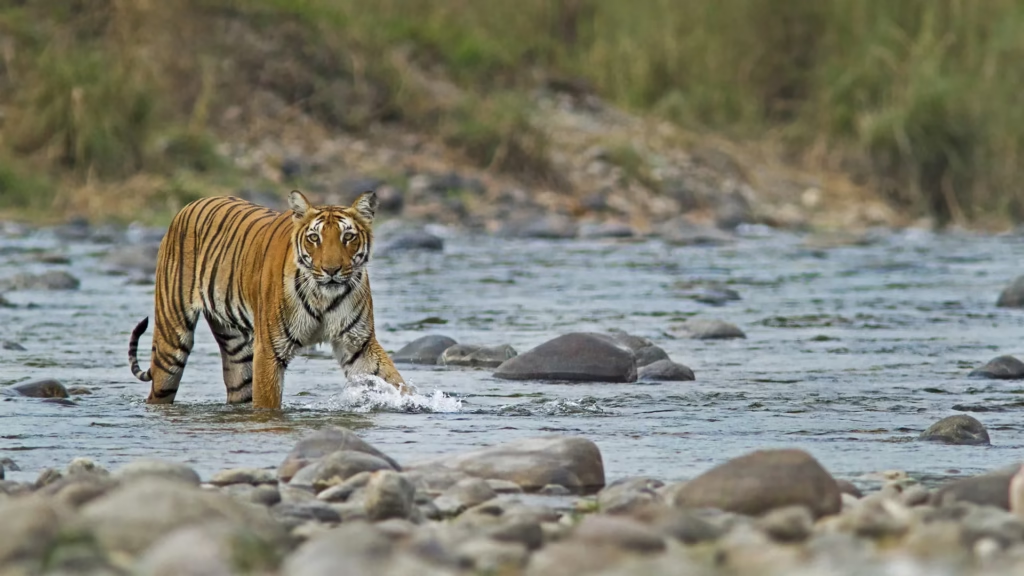
The Complete Guide to India’s Oldest and Most Legendary National Park
Every tiger reserve in India owes something to Jim Corbett National Park. It was here, in the forested foothills of the Kumaon Himalayas, that India’s first national park was established in 1936. It was here that the tiger’s claim to formal protection was first recognised in law. And it was here, in 1973, that Project Tiger — the programme that pulled the Bengal tiger back from the edge of extinction — chose to make its inaugural declaration. Before Ranthambore, before Bandhavgarh, before Kanha, there was Corbett. The story of tiger conservation in India begins in these forests, and it has never fully left them.
Jim Corbett National Park sits in the Nainital and Pauri Garhwal districts of Uttarakhand, in the outer Himalayan foothills known as the Terai and Bhabar. The landscape is unlike any other tiger reserve in India. The Ramganga River runs through the heart of the park, lined with riverine forest and grassland. The Himalayan foothills rise behind the forest in successive ridges, visible from the open grasslands on clear mornings as a wall of blue and white peaks. The sal forest is dense, tall, and ancient. The Dhikala grasslands are among the finest in the Indian subcontinent. And the wildlife — not just tigers but elephants, gharial, leopard, over 600 species of birds — is as diverse and abundant as anywhere in the country.
Corbett is not the easiest park in India in which to see tigers. The dense forest, the topography, and the large size of the reserve mean that sighting rates are lower than at Tadoba or Bandhavgarh. What Corbett offers instead is something qualitatively different — an immersion in a landscape of such scale, beauty, and ecological richness that the experience of a safari here transcends the question of whether a tiger appeared. That said, tigers are seen, regularly and sometimes spectacularly. The anticipation that Corbett’s forest generates — the sense that anything could emerge from the sal trees at any moment — is its own form of wildlife experience, and one that many seasoned travellers rate above the more guaranteed sightings of other parks.
This is the complete guide to planning your tiger safari in Jim Corbett National Park.
The Landscape and Its Significance
Jim Corbett covers a total area of approximately 1,318 square kilometres of core zone, with a surrounding buffer adding considerably to the protected landscape. The Terai Arc — the belt of forest, grassland, and wetland running along the base of the Himalayas from Uttarakhand through Nepal into the northeast — is one of the most important wildlife corridors in Asia, and Corbett sits at its western anchor. Tigers, elephants, and other large mammals move through this corridor across national and international boundaries, and the health of Corbett’s ecosystem has consequences that extend far beyond the park’s formal limits.
The Ramganga Reservoir, created by a dam in the 1970s, is the park’s central water body and a critical focus for wildlife. The shores of the reservoir, lined with tall grass and overlooked by forested slopes, attract enormous numbers of animals including tigers, elephants, gharial crocodiles, and waterfowl. The Dhikala area, which overlooks the reservoir from an elevated grassland plateau, is the most celebrated and productive section of the entire park.
The man after whom the park is named — Jim Corbett himself — was a colonial-era hunter and tracker who became one of India’s most famous conservationists. Born in Nainital in 1875, Corbett spent decades hunting the man-eating tigers and leopards of Kumaon before arriving at a deep conviction that the tiger needed protection rather than pursuit. His books — Man-Eaters of Kumaon, The Man-Eating Leopard of Rudraprayag — introduced the forests of this region to a global readership and built the public case for their conservation. The park was named in his honour after his death in 1955. The Corbett legacy — of a man who moved from hunter to protector — prefigures the broader arc of India’s relationship with its wildlife across the twentieth century.
Understanding the Safari Zones
Corbett is divided into five tourism zones within the core area, each with distinct character, access rules, and wildlife. The zoning system is more complex than at many other Indian reserves, partly because of the park’s size and partly because different sections have very different ecological characters.
Dhikala Zone is the crown jewel of Corbett and one of the finest wildlife areas in India. Access to Dhikala requires an overnight stay inside the park at the Dhikala Forest Rest House — day visitors are not permitted in this zone. The Dhikala grasslands overlook the Ramganga Reservoir and offer wildlife viewing of exceptional quality. Tigers, elephants, gharial, swamp deer (barasingha), hog deer, and an extraordinary variety of birds are all regularly encountered. A dawn drive from the Dhikala forest rest house, across the grass with the Himalayan foothills catching the first light behind you, is among the most memorable wildlife experiences available in Asia. The permit quota for Dhikala overnight stays is strictly limited and books out months in advance. Prioritising a Dhikala night above everything else in your Corbett planning is the most important single piece of advice this guide can offer.
Bijrani Zone is the most accessible and popular day-visit zone, entered from the Amdanda gate near Ramnagar. The terrain here includes dense sal forest, open grasslands, riverine areas, and a network of tracks that reliably produce wildlife sightings. Tiger encounters in Bijrani are good and the zone is consistently rated as one of the better areas for cat sightings within the park. The mix of habitats — forest, grassland, water — creates conditions where multiple species can be observed within a single three-hour session. For visitors without the overnight Dhikala option, Bijrani is the priority zone.
Jhirna Zone is the only zone open year-round, remaining accessible even during the period when other zones are closed. Jhirna is drier in character than the other zones, its vegetation slightly different, and its wildlife community somewhat distinct. Tiger sightings occur here with regularity, and the zone is particularly productive for leopard and sloth bear. For visitors travelling outside the main season or seeking a different character of experience, Jhirna offers a valuable alternative. The zone is entered from the Jhirna gate in the south of the park.
Sitabani Zone is technically outside the core national park boundary and falls within the buffer zone and a separate Wildlife Reserve. It is open year-round, permits are easier to obtain, and the atmosphere is significantly quieter than the core zones. Tiger sightings are possible and occur with meaningful regularity as Sitabani connects to tiger territories in the core. For visitors who value solitude and a wilder atmosphere over maximum sighting probability, Sitabani is worth serious consideration. Elephant sightings here are often very good.
Durgadevi Zone is located in the northeast of the park and is accessed from Ranikhet Road. It is the least visited of the five zones and offers a genuinely remote experience. The terrain is hilly and forested with the Ramganga River running through it. Tiger sightings are lower probability than in Bijrani or Dhikala but the zone rewards patient, unhurried wildlife watching with excellent bird and mammal diversity. For multi-day visitors wanting to explore beyond the well-trodden routes, Durgadevi provides a compelling option.
Sonanadi Zone connects Corbett to the adjacent Sonanadi Wildlife Sanctuary and provides access to a transitional forest habitat. Elephant herds move through Sonanadi in large numbers, and the zone is among the best in the entire Corbett landscape for elephant observation. Tiger sightings occur but are secondary to the elephant experience here.
The strategic recommendation is clear: if you can secure an overnight stay at Dhikala, structure your entire trip around it. If not, prioritise Bijrani for day safaris, add Jhirna for contrast, and consider Sitabani for a quieter half-day experience.
Safari Vehicles and Options
Corbett’s safari arrangements differ in certain respects from other Indian tiger reserves and understanding these differences before you arrive avoids confusion.
Canter safaris and Gypsy safaris both operate in Corbett, with the Gypsy remaining the preferred option for serious wildlife watching and photography. Corbett’s terrain — narrow forest tracks, dense sal, riverine edges — makes the smaller, lower, and more manoeuvrable Gypsy significantly more effective than the larger Canter for approaching and observing wildlife. The six-person limit allows the quiet and intimacy that tiger watching demands.
Corbett also offers a distinctive option not available at most other Indian reserves: elephant safaris. Trained elephants with mahouts carry two to four passengers into sections of the forest that are inaccessible to vehicles, and the elevated vantage point and silent movement allow a completely different type of wildlife encounter. Elephant safaris are particularly effective for approaching tigers at very close range — tigers largely ignore elephants and remain calm in their presence in a way they do not with vehicles. However, availability is limited and this option requires advance arrangement. Elephant safaris are not universally available across all zones and the schedule varies — check current availability when planning.
The Dhikala overnight option involves staying at the government-run Forest Rest House inside the park, with early morning and evening drives from the rest house across the grasslands. This is a fundamentally different experience from a day safari — the overnight stay means you are inside the forest after all day visitors have left, and the evening and dawn hours are when Dhikala’s wildlife is most active and most visible. Jeep safaris from within Dhikala, guided by park naturalists, cover the grassland plateau and the reservoir banks in conditions of remarkable quiet. The accommodation is functional rather than luxurious, which is entirely appropriate — you are staying inside a working tiger reserve, not a hotel with forest views.
Morning safaris throughout the park depart at sunrise, approximately 6 to 6:30 AM in the cooler months and earlier in summer. Evening safaris depart in the early to mid afternoon. Three-hour sessions are standard for day visit zones. Dhikala overnighters have more flexible access to the grasslands across the morning and evening hours.
The Best Time to Visit Jim Corbett
Corbett’s seasonal calendar differs from the central Indian reserves and requires separate consideration, partly because the Terai climate is distinct from Madhya Pradesh and Rajasthan, and partly because the park’s zone-by-zone opening and closing schedule adds complexity.
The park has a partial monsoon closure — most core zones close from mid-June through mid-November, with the exception of Jhirna and Sitabani which remain open year-round. This closure window is longer than at some other reserves and significantly affects planning.
November and December mark the reopening of the main zones and the beginning of the cooler season. The vegetation is thick with post-monsoon growth and visibility into the forest is limited, but the atmosphere is beautiful, the birds are exceptional as winter migrants arrive in large numbers, and the Ramganga flows full and clear. Tiger sightings are possible in all zones but lower probability than in the dry season. This is a good period for those who prioritise the landscape, the birds, and a quieter experience without peak season crowds.
January through March is the prime season for a comfortable and well-rounded Corbett experience. Temperatures are cool to pleasantly warm, the vegetation thins progressively as the dry season advances, visibility improves, and animal activity is strong across all zones. The Ramganga and the reservoir attract large concentrations of gharial and waterfowl. Tiger sightings are good, elephant herds are active, and the Himalayan views on clear mornings from the Dhikala grasslands are extraordinary. This is when Corbett is at its most photographically beautiful and its most comfortable.
April through mid-June is the dry season and the period of highest tiger sighting probability. The forest opens up significantly as trees lose leaves and vegetation dries, the waterholes concentrate wildlife, and tigers are seen with increasing frequency in the open. The Dhikala grasslands in April, with the grass dry and short and the reservoir at its lowest exposing wide mudflats covered in gharial, is one of the great wildlife spectacles of the Terai. Temperatures climb through April and May, reaching 38 to 40°C by late May, but the mornings remain manageable and the quality of wildlife sightings justifies the heat for those willing to accept it.
Jhirna and Sitabani are available year-round, including during the monsoon, and provide the only options for visiting Corbett between mid-June and mid-November. Monsoon visits to Jhirna can be atmospheric and rewarding for those who value rain-soaked forest and solitude, though wildlife visibility is reduced.
The considered recommendation is that February through April is the optimal window for a first-time visitor balancing comfort, sighting probability, and the full range of Corbett’s wildlife. January adds excellent birdwatching and Himalayan views. Late April and May maximise tiger sighting rates at the cost of heat.
How to Book Safari Permits
Corbett’s booking system is managed through the Uttarakhand Forest Department’s online portal and operates on a rolling advance booking basis. The system differs in certain details from the Madhya Pradesh portal and merits specific attention.
Day safari permits for Bijrani, Jhirna, Durgadevi, and Sonanadi zones are bookable online with advance planning, typically 45 to 90 days ahead. The Bijrani zone morning sessions between February and April are the most contested among day-visit options and should be booked as early as possible.
The Dhikala overnight permit is a separate and more complex booking. Accommodation at the Dhikala Forest Rest House is limited — a small number of rooms and dormitory beds — and is booked through the Corbett Tiger Reserve office or through the online portal on a first-come, first-served basis that is genuinely competitive. The Dhikala overnight package includes entry permits for the grassland drives. For peak season dates, booking Dhikala accommodation several months ahead is essential. Cancellations do occur and monitoring the portal regularly can yield availability at shorter notice.
Many wildlife lodges near Ramnagar, which is the main gateway town for Corbett, maintain relationships with the Forest Department and hold permit quotas. Booking through a lodge is particularly recommended for first-time visitors and for those wanting experienced naturalist guidance rather than the park-assigned guides available through the official system. The quality of independent naturalists and guides based near Corbett — some of whom have decades of experience in these specific forests — is high and their local knowledge is invaluable.
A licensed naturalist or guide is mandatory for all safaris. Photo ID is required for every passenger — passport for foreign nationals, Aadhaar or equivalent for Indian nationals. Camera fees apply for professional equipment including DSLRs with long lenses in some zones — verify current requirements at the time of booking.
The Sitabani zone operates under a separate booking system from the main park, as it falls outside the national park boundary. Permits for Sitabani are somewhat easier to obtain and can often be arranged at shorter notice through lodges in the area.
Wildlife Beyond the Tiger
Corbett’s wildlife diversity is arguably the broadest of any tiger reserve in India, and for a significant proportion of visitors the non-tiger wildlife is as compelling as the cats themselves.
Asian Elephant — Corbett has one of India’s largest elephant populations outside of the dedicated elephant reserves, with several hundred individuals roaming the park and its surroundings. Herds of twenty, thirty, or more elephants are encountered regularly, and a family group crossing the Ramganga or moving through the Dhikala grasslands at dusk is one of the great wildlife sights of the Terai. Corbett’s elephants are powerful, intelligent, and occasionally unpredictable — naturalists treat them with corresponding respect. Bull elephants in musth require particular caution and experienced guides understand the warning signs.
Gharial — The Ramganga River and the reservoir support a significant population of the Gharial, the critically endangered fish-eating crocodile with its distinctive narrow snout. Corbett is one of the most reliable places in the world to observe Gharial in the wild, and the sight of a dozen or more of these prehistoric-looking animals basking on the Ramganga mudflats, their pale scales catching the morning sun, is extraordinary. The Mugger Crocodile, more generalised in its diet, is also present.
Leopard — Corbett has a healthy leopard population and sightings, particularly in the forested hillside areas of Bijrani, Durgadevi, and the buffer zones, are reasonably common for an animal renowned for its secretiveness. The tall sal forest and rocky terrain suit leopard perfectly.
Jungle Cat, Fishing Cat, and Leopard Cat — Corbett’s smaller cat diversity is exceptional. All three of these smaller felids are present, with Jungle Cat the most frequently seen, often in grassland and scrub edges. Fishing Cat, associated with the riverine and wetland habitats, is a genuine rarity even here but has been documented.
Sloth Bear — Present throughout the forested areas and seen with reasonable frequency, particularly in the Bijrani and Jhirna zones.
Indian Python — Common in the riverine and grassland areas. Large individuals basking near the Ramganga are not unusual sightings.
Otters — Smooth-coated Otter are present along the Ramganga and its tributaries and are seen occasionally, playing in the shallows or fishing in family groups.
The Birds — Corbett’s birdlife is genuinely staggering. Over 600 species have been recorded, making this one of the richest birding destinations in South Asia. The combination of Himalayan foothills, Terai grassland, riverine forest, and wetland creates an extraordinary range of habitats, each supporting distinct bird communities. Highlights include the Great Hornbill, Pallas’s Fish Eagle, Brown Fish Owl, Crested Kingfisher, Ibisbill along the rocky rivers, Ruddy Shelduck on the reservoir, and a suite of Himalayan species visible from the forested slopes. Winter brings spectacular concentrations of migrant ducks, waders, and raptors. For serious birdwatchers, Corbett justifies a dedicated visit entirely independent of the tiger question.
Getting to Jim Corbett
Corbett is well connected to Delhi and the broader north Indian travel circuit, making it one of the more accessible major tiger reserves for international visitors.
Ramnagar, the gateway town for most of Corbett’s zones, is approximately 250 kilometres from Delhi — around five to six hours by road on the NH9 and connecting state highways. This is a manageable drive and many visitors come by private car or hired taxi from Delhi, sometimes stopping at Moradabad or travelling via Haridwar.
By rail, Ramnagar has its own railway station with direct services from Delhi. The Ranikhet Express and other services run from Delhi to Ramnagar in approximately six hours. The train journey passes through the Gangetic plain and into the Terai, and the final approach to Ramnagar as the foothills begin to appear on the horizon is atmospheric. Several Delhi-Ramnagar trains run overnight or in the early morning, allowing arrival at a useful time for same-day safari preparation.
Pantnagar Airport, approximately 80 kilometres from Ramnagar and around one and a half hours by road, has limited domestic connections from Delhi. The service is infrequent and most visitors find the road or rail options more practical. For those coming from outside Delhi, flying to Delhi and continuing by road or train is the standard approach.
For visitors combining Corbett with other destinations, the park sits naturally within a broader Uttarakhand circuit. Nainital, the famous hill station, is approximately 65 kilometres from Ramnagar — an easy half-day drive that allows the combination of wildlife and hill country in a single trip. Rishikesh and Haridwar are approximately 180 kilometres away on reasonably good roads, opening the possibility of Corbett alongside a visit to the Himalayan foothills and the upper Ganges.
What to Pack
Neutral-coloured clothing in khaki, olive, dark green, or tan. Corbett’s dense sal forest and riverine habitat make muted clothing particularly important — bright colours are genuinely disruptive in the dappled forest light and experienced naturalists notice when their group stands out visually.
Warm layers for the cooler season. January mornings in Corbett, particularly at Dhikala where the grassland is elevated and exposed, can be bitterly cold — temperatures approaching zero Celsius at dawn, with wind chill from an open moving vehicle adding considerably to the discomfort. A heavy fleece, a down jacket, and a windproof outer layer are not excessive. Gloves and a warm hat are useful for the coldest mornings.
Sun protection for the dry season months — high-factor sunscreen, a wide-brimmed hat, and UV-protective sunglasses. The open grassland at Dhikala provides no shade, and the spring and summer sun at the Terai elevation is strong.
Binoculars of 8×42 or 10×42. In Corbett’s dense forest, binoculars are essential for resolving the silhouette in the shadows that might be a tiger, for reading alarm behaviour in distant deer herds, and for the exceptional birdwatching. For birding specifically, 10×42 binoculars are strongly preferred.
A camera with a telephoto lens. In Corbett’s dense forest, a 400mm lens is the minimum for usable wildlife shots and longer is better. At Dhikala’s open grassland, where encounters can be at greater distances, a 500 or 600mm lens is advantageous for serious photographers. A wide-angle lens for landscape shots — the Himalayan backdrop at Dhikala, the Ramganga at dawn — is also worthwhile.
Insect repellent. The Terai has a more significant mosquito and insect population than the drier central Indian reserves, particularly in the earlier and later parts of the season. A good DEET-based repellent and covering clothing for dawn and dusk are sensible.
A dustproof bag for camera equipment in the dry season, and waterproof protection in the wet season or for early morning dew.
Adequate water — three to four litres per session. The heat in April and May is less extreme than at Tadoba or Chandrapur but still significant, and staying hydrated is important.
Your passport or government-issued photo ID, mandatory for every passenger at the gate.
Conservation: The Park That Started It All
The conservation history of Jim Corbett National Park is inseparable from the history of Indian wildlife protection itself, and understanding it enriches every hour spent inside the forest.
The park was established in 1936 as Hailey National Park, named after the then Governor of the United Provinces, Malcolm Hailey. It was the first national park in India and among the earliest in Asia. The creation of the park reflected a convergence of pressures — concern about the decline of wildlife in the Terai, advocacy from naturalists and hunters including Jim Corbett himself, and a growing colonial-era recognition that unlimited hunting was incompatible with the long-term survival of large mammal populations.
Project Tiger’s launch from Corbett in April 1973 — with Prime Minister Indira Gandhi attending the inaugural ceremony at Dhikala — elevated the park to symbolic as well as ecological significance in Indian conservation. The nine original Project Tiger reserves, with Corbett at their head, established the framework of protected core areas and surrounding buffer zones that now covers more than 50 reserves across the country.
The intervening decades have brought both progress and challenge to Corbett. The tiger population has recovered substantially from the crisis levels of the early 1970s. The elephant population is large and growing. The Gharial, though critically endangered globally, maintains a meaningful presence in the Ramganga. The bird diversity remains exceptional.
The challenges are significant too. The park is bordered by rapidly growing human settlements and agricultural land. The corridor connections to adjacent forests that allow tigers and elephants to move through the broader Terai landscape are under pressure from development. Human-elephant conflict in the agricultural buffer zone around the park is a persistent and serious problem — crop raiding by elephant herds causes real hardship for farming communities, and the occasional human deaths that result create understandable tensions. Managing this conflict, compensating affected families, and maintaining goodwill between the park and surrounding communities is among the most demanding aspects of Corbett’s conservation management.
Tourism, responsibly conducted, contributes to the case for conservation by generating revenue, employment, and a public constituency for the park’s protection. The density of wildlife lodges and safari operations around Ramnagar creates a local economy substantially dependent on the park’s continued existence and health. This economic stake is imperfect as a conservation instrument — it creates incentives that can sometimes conflict with wildlife welfare — but it is real and important.
Corbett’s longevity as a protected area, now approaching nine decades, demonstrates what sustained protection can achieve. The forest that Jim Corbett walked in the early twentieth century — hunting the man-eaters that terrorised villages across Kumaon — still stands, still holds tigers, still sustains the full community of large mammals that characterises a healthy Terai ecosystem. That continuity, in a region and a country that has undergone extraordinary change across those nine decades, is in itself a conservation achievement of the highest order.
Planning Your Visit: A Summary
Jim Corbett rewards those who approach it with realistic expectations, genuine curiosity, and a willingness to be absorbed by a landscape rather than simply to extract a sighting from it.
If at all possible, book an overnight stay at Dhikala. Do this before you arrange anything else. The Dhikala grasslands at dawn, the reservoir at low water, the elephants moving through the tall grass as the Himalayan peaks emerge from the morning haze — this is the experience that defines Corbett and differentiates it from every other park in India. It requires planning and persistence to arrange, and it is worth every effort.
For day safaris, prioritise Bijrani for tiger sightings, add Jhirna for a different character of forest, and consider Durgadevi or Sitabani for solitude and a wilder atmosphere. Pair morning and evening sessions to capture the full range of the park’s daily rhythm.
Bring binoculars regardless of whether you consider yourself a birdwatcher. Corbett’s bird diversity is extraordinary and will assert itself whether you invite it or not. Many visitors who arrive with tigers as their sole focus leave with their most vivid memory being a Great Hornbill crossing the Ramganga at dawn, or a Pallas’s Fish Eagle dropping to the reservoir surface, or a Brown Fish Owl staring from the shadows of a riverside tree. This is not a consolation for missing a tiger. It is what Corbett, specifically and uniquely, offers.
Come with patience. The dense forest and large size of the reserve mean that Corbett requires more patience than the more consistently productive parks of Madhya Pradesh and Maharashtra. But patience in Corbett is rewarded differently — not always with a tiger at close range, but with the accumulated sense of being genuinely inside a wild place, in a forest that has been wild for nearly a century of formal protection and for millennia before that, where the probability of a tiger is always present in the same way that possibility is always present in a landscape of sufficient scale and health.
Jim Corbett is where Indian tiger conservation began. To walk away from it having felt, even briefly, why it was worth beginning — that is the full measure of what this park can give.
Keywords: Jim Corbett tiger safari, Corbett National Park, Corbett tiger reserve, Dhikala safari, tiger safari Uttarakhand, Bijrani zone Corbett, best time to visit Jim Corbett, Project Tiger India, Ramnagar wildlife safari, Corbett elephant safari, Terai wildlife India, gharial Ramganga, Jim Corbett safari booking