
Rhino Tours of Kaziranga: The Complete Guide to India’s Greatest Wildlife Spectacle
Plan your luxury rhino safari in Kaziranga National Park, Assam. Discover the best zones, safari types, top lodges, booking tips, and what makes Kaziranga the world’s premier one-horned rhinoceros destination.
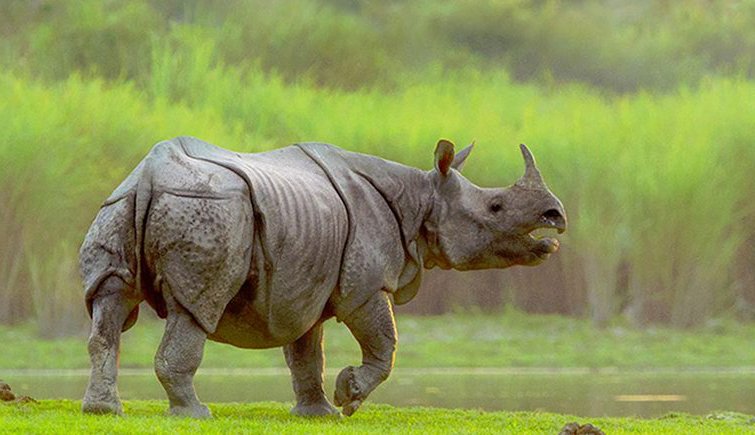
There is a moment, common to almost every visitor who has been to Kaziranga, that no photograph fully captures. You are in an open jeep or atop an elephant at dawn, the Brahmaputra mist still draped across the floodplain, when a one-horned rhinoceros materialises out of the tall grass twenty metres away. It stands the height of a small car. Its hide is folded and armoured like something from the age of megafauna. It looks at you with small, calm eyes, decides you are irrelevant, and returns to grazing. In that moment, geological time collapses. You are not in the twenty-first century. You are simply in the presence of something ancient and magnificent and still, against all odds, here.
Kaziranga National Park in Assam is the reason that encounter is possible. It is one of conservation’s great triumphs — and one of wildlife travel’s greatest destinations.
KAZIRANGA: THE WORLD’S RHINOCEROS CAPITAL
Kaziranga National Park sits in the Golaghat and Nagaon districts of Assam in northeastern India, occupying a narrow strip of floodplain along the southern bank of the Brahmaputra River. It covers approximately 430 square kilometres of core zone, with a total tiger reserve area extending beyond 1,000 square kilometres when buffer zones are included. In 1985, UNESCO declared it a World Heritage Site — a designation that reflects not just its biodiversity but its importance as one of the last functioning large-mammal ecosystems in South Asia.
The park’s defining achievement is the Indian one-horned rhinoceros. Kaziranga holds approximately two-thirds of the entire world population of this species — currently estimated at over 2,600 individuals within the park alone. At the turn of the twentieth century, the rhino had been hunted to near-extinction across the subcontinent, with fewer than a dozen animals remaining in this landscape. Conservation efforts beginning under British colonial administration and dramatically intensified after independence have produced one of the most remarkable wildlife recoveries in recorded history.
But Kaziranga is far more than a rhinoceros sanctuary. It holds the world’s highest density of Bengal tigers outside of a dedicated tiger reserve, with over 100 individuals recorded. Its elephant population numbers in the hundreds. It is home to wild water buffalo, eastern swamp deer, Gangetic river dolphins, smooth-coated otters, sloth bears, leopards, Asiatic black bears, and over 480 species of birds. Across its mosaic of tall elephant grass, tropical semi-evergreen forest, and seasonal wetlands, Kaziranga represents a near-complete northeastern Indian ecosystem operating at full ecological health.
WHY KAZIRANGA IS IN A CLASS OF ITS OWN
Wildlife travellers who have visited the great parks of Africa and the tiger reserves of Central India often arrive at Kaziranga expecting something similar and leave describing something entirely different. Several qualities set it apart.
The sheer density of large mammals is unlike anywhere else on earth outside of the Serengeti. On a single morning safari in the Central Range, it is not unusual to encounter thirty or forty rhinoceroses, several herds of wild elephant, swamp deer in groups of a hundred or more, wild water buffalo grazing at the forest edge, and a tiger sighting before the mist has fully lifted. The cumulative weight of large animals in a small area creates an atmosphere of primordial abundance that is simply not reproducible elsewhere in Asia.
The landscape itself is extraordinarily photogenic. The combination of tall elephant grass — some stands reaching five or six metres — open wetland pools, semi-evergreen forest, and the vast, braided Brahmaputra forming the northern boundary produces a quality of light and a visual drama that makes every hour in the field feel cinematic. At dawn and dusk, with mist moving across the grassland and egrets lifting from the marshes, Kaziranga is as beautiful as wildlife landscapes get.
The elephant safari, unique to Kaziranga among India’s major parks, offers an entirely different dimension of access. Moving silently through tall grass on elephant back, approaching rhinoceroses at distances impossible in a jeep, watching the grassland open up around you as the elephant parts the stands — it is an experience that has no equivalent in Indian wildlife tourism.
KAZIRANGA’S SAFARI ZONES
The park is divided into four main safari ranges, each with a distinct character and wildlife profile. Selecting the right zone for each outing is the foundation of a well-planned Kaziranga visit.
Central Range (Kohora)
The Central Range is the most productive zone in the park and the primary entry point for most visitors. It offers the highest density of rhinoceroses, reliable tiger sightings, large elephant herds, and the greatest diversity of habitats within a single safari. The Diphlu River, which runs through the Central Range, attracts wildlife to its banks throughout the day and provides beautiful riparian scenery. The Mihimukh waterhole within this range is one of Kaziranga’s most famous wildlife gathering points — mornings here can produce sightings of rhinoceros, elephant, and swamp deer simultaneously within a single field of view.
Elephant safaris in Kaziranga operate from the Central Range. These are conducted in the very early morning and provide intimate access to rhinoceroses in the tall grassland habitats that jeep vehicles cannot navigate. The elephant safari is not optional for the serious Kaziranga visitor — it is a cornerstone of the experience and should be booked in advance.
Western Range (Bagori)
The Western Range is considered by many wildlife photographers and naturalists to be the finest zone in the park for both quantity and quality of sightings. It holds exceptional rhinoceros and elephant populations and is particularly renowned for tiger activity. The open grassland terrain within the Western Range gives longer sight lines than the Central Range, making it outstanding for photography and for extended animal watching without obstruction. Sunsets over the Western Range, with rhinoceroses silhouetted against the Brahmaputra floodplain, are among the iconic images of Indian wildlife photography.
Eastern Range (Agoratoli)
The Eastern Range is the quietest and least-visited of the main zones, and for that reason it is a favourite of experienced wildlife travellers who have already explored the Central and Western Ranges. The habitat here is more forested, with thicker stands of semi-evergreen trees providing excellent conditions for leopard, Asiatic black bear, various primates, and forest birds. Rhinoceroses and elephants are present but in lower densities than the western zones. The Eastern Range rewards those willing to trade headline mammal numbers for a more immersive, exploratory forest experience.
Northern Range (Burapahar)
The Northern Range sits on higher ground than the other zones and offers a markedly different landscape — more forested, more hilly, and more remote in character. Wildlife here includes gibbons, Asiatic black bear, elephants, and a suite of forest species not easily encountered in the grassland zones. For birders and those seeking a complete picture of Kaziranga’s ecological diversity, at least one Northern Range safari is worthwhile.
THE RHINOCEROS: KNOWING YOUR SUBJECT
The Indian one-horned rhinoceros, Rhinoceros unicornis, is one of the five extant rhinoceros species and the largest land animal in South Asia after the elephant. Adult males weigh between 2,000 and 2,700 kilograms and stand up to 1.8 metres at the shoulder. Their distinctive single horn, composed of keratin — the same material as human fingernails — was the reason for their near-extinction and remains the source of ongoing poaching pressure today despite ironclad legal protection.
Unlike African rhinoceros species, the Indian one-horned rhino is a reasonably competent swimmer and makes regular use of wetlands, pools, and river banks. It is largely solitary, though gatherings at waterholes are common, and it is both grazed and a browser, consuming grasses, leaves, shrubs, and aquatic plants. In Kaziranga’s tall elephant grass, rhinos create and maintain their own networks of paths and wallowing pools, and learning to read these signs is part of the tracker’s art.
A Kaziranga rhinoceros in open terrain is surprisingly relaxed around safari vehicles and elephants, having been accustomed to their presence across generations. This habituation allows extended, close observation of natural behaviour — wallowing, grazing, social interactions, mother-calf relationships — that is genuinely intimate and profoundly moving. Seeing a calf following its mother through the grass, tiny and somehow already armoured, is one of those wildlife moments that stays with a person indefinitely.
LUXURY SAFARIS AND ACCOMMODATION IN KAZIRANGA
Kaziranga has developed one of India’s most sophisticated luxury wildlife lodge ecosystems, with several world-class properties offering experiences that match the finest game lodges of southern Africa in service, design, and naturalist quality. For the luxury traveller, the accommodation choices are as much a part of the journey as the safaris themselves.
Diphlu River Lodge
Widely regarded as the finest lodge in the Kaziranga area, Diphlu River Lodge sits on the banks of the Diphlu River adjacent to the park boundary and is consistently ranked among the top wildlife lodges in India. Its twelve beautifully designed cottages blend into the forest landscape, its resident naturalists are among the most knowledgeable in the region, and the overall atmosphere — intimate, unhurried, genuinely connected to the wild — is exceptional. The lodge has direct access to both the Central and Western Ranges and manages its safari programme with meticulous attention to wildlife ethics and guest experience.
Borgos Resorts Kaziranga
A large, beautifully maintained property with a full range of room categories from comfortable standards to luxury tents and river-facing suites. Infinity is strong on service, food, and safari coordination and is a good choice for families or groups with mixed accommodation preferences. The resort manages its own naturalist team and has good relationships with the forest department for advance permit booking.
Iora — The Retreat
A smaller, more boutique property known for exceptional food and a highly personal service style. Iora attracts serious wildlife enthusiasts who appreciate a quieter, less resort-like environment. The naturalist here has an outstanding reputation and the lodge’s safari programmes are thoughtfully designed around actual wildlife patterns rather than standard routes.
Kohora Camp and Other Mid-Luxury Options
Several well-run mid-range properties near Kohora offer comfortable accommodation with good safari access at more accessible price points. These are appropriate for travellers who prioritise safaris over lodge amenities and want to direct more of their budget toward multiple range visits and specialist naturalist guiding.
For those seeking the absolute pinnacle of the Kaziranga experience, combining a stay at Diphlu River Lodge with a dedicated naturalist for private safaris and pre-booked elephant safari slots represents the gold standard.
THE BEST TIME TO VISIT KAZIRANGA
Kaziranga follows the rhythm of the Brahmaputra. The great river’s monsoon floods, which inundate much of the park between June and September, force wildlife onto the higher ground of the park’s interior and surrounding hills. After the waters recede, the grassland regenerates, the wetland pools settle, and the wildlife returns to the floodplain in extraordinary concentration.
November to April is the primary season. Within this window, distinct sub-seasons offer different experiences.
November to January brings fresh, lush grass after the monsoon, comfortable temperatures ranging from 8°C to 25°C, and exceptional birdlife as winter migrants arrive in large numbers. Wildlife is widely distributed across the grasslands and the vegetation is at its most photogenic — vivid green against the grey river and the blue Assam sky. Tiger sightings are good throughout this period.
February to April represents the peak season for overall wildlife watching. As the grass dries and is periodically burned as part of park management, sight lines open dramatically. Animals concentrate near remaining water sources and in the unburned grass patches, making sightings more frequent and more extended. March and April in particular can produce extraordinary encounters — rhinoceroses at wallowing pools, tigers crossing open ground in the morning light, elephant herds moving in full view across the burned grassland. The light in March and April is also outstanding for photography.
May sees the park approach its closing date and the first pre-monsoon storms arrive. Humidity rises sharply and conditions become uncomfortable, though serious wildlife enthusiasts who can tolerate the heat find that sightings remain productive right up to the closure.
The park typically closes from around May 15 until October 15, with the exact dates varying by year depending on flood levels and park management decisions.
SAFARI FORMATS AND TIMINGS
Jeep safaris are the standard format and operate twice daily from each range. Morning safaris typically begin between 5:30 and 6:30 AM and run for approximately three hours. Afternoon safaris begin around 2:00 PM and conclude before sunset. Morning safaris are strongly preferred for large mammal activity, tiger sightings, and photography light. Afternoon safaris are excellent for birding, wetland watching, and the extraordinary golden light of the Assam dusk.
Elephant safaris operate from the Central Range and are conducted exclusively in the early morning, typically beginning at dawn. Slots are limited and in very high demand. Booking in advance through the forest department or via your lodge is essential. Each elephant carries four visitors plus a mahout. The experience of moving silently through five-metre elephant grass on elephant back, with rhinoceroses visible just metres away on either side, is unlike anything available elsewhere in India.
Private naturalist-led jeep safaris, arranged through premium lodges, provide a significantly enhanced experience compared to standard shared vehicles. A dedicated naturalist who knows the park intimately, combined with the flexibility of a private vehicle to pause, reposition, and stay with an animal for as long as conditions allow, transforms a good safari into an exceptional one.
WILDLIFE BEYOND THE RHINOCEROS
The Bengal tiger at Kaziranga is frequently underestimated by visitors focused on the rhinoceros. The park holds one of India’s densest tiger populations, and sightings — particularly in the Western Range during the dry season when grass has been burned — are genuinely excellent. Encountering a tiger and a rhinoceros in the same morning safari, which happens regularly at Kaziranga, is one of India’s most extraordinary wildlife combinations.
The wild water buffalo of Kaziranga deserve particular attention. Larger and far more dangerous than their domestic counterparts, wild buffalo move through the park in small herds and have an air of raw, uncompromising power that is distinct from any other large herbivore in India. The eastern swamp deer, or barasingha — a species that has been eliminated from most of its former range — survives in Kaziranga in numbers that make the park critical to its global survival.
The birdlife is staggering. Over 480 species have been recorded in the park, including the greater adjutant stork — one of the world’s rarest large birds, for which Kaziranga and its surroundings are a global stronghold — along with pelicans, various fish eagles, the rare Bengal florican, bar-headed geese, ruddy shelduck, and an extraordinary diversity of herons, egrets, and waders. For serious birdwatchers, Kaziranga demands at least one full dedicated birding morning in addition to the standard mammal-focused safaris.
River trips on the Brahmaputra, available through some operators, offer encounters with Gangetic river dolphins and smooth-coated otters in an entirely different habitat dimension.
PRACTICAL INFORMATION FOR KAZIRANGA VISITS
Getting there: Jorhat Airport is the closest airport at approximately 97 km from the park, with regular flights from Kolkata and Guwahati. Guwahati Airport is larger, better connected to major Indian cities, and approximately 220 km from Kaziranga — around four to five hours by road through the beautiful Assam countryside. Guwahati is the preferred gateway for international travellers connecting through Kolkata or Delhi. The nearest railway station is Furkating Junction at approximately 75 km, connected to major northeastern Indian routes.
By road, Kaziranga sits on National Highway 37 and is well-signed. Most luxury lodges arrange airport pickup from either Jorhat or Guwahati on request.
Permits and booking: Safari permits are issued by the Assam Forest Department and can be booked online or through your lodge. Premium lodges handle permit logistics as a standard part of their service and will pre-book elephant safari slots, which are the hardest permits to secure. Independent travellers should book permits well in advance for peak months of February to April.
Health and practical notes: Carry insect repellent and appropriate sun protection. The tall grass habitat harbours leeches after rain, and full-length clothing is advisable on foot. Malaria prophylaxis should be discussed with a travel medicine doctor before visiting Assam. The park road network involves jeep tracks that can be rough — those with serious back or joint concerns should discuss this with their operator.
Photography: Kaziranga is among the finest wildlife photography destinations in the world. A 400mm or 500mm telephoto lens is ideal for animal portraits. Wide-angle glass for landscape and habitat shots is equally rewarding. The morning mist in the first hour of a dawn safari creates atmospheric conditions that are difficult to replicate anywhere else. A good bean bag for stabilising long lenses in the jeep is worth carrying.
THE LUXURY KAZIRANGA ITINERARY
A well-structured luxury Kaziranga visit of five to seven nights allows thorough exploration of multiple zones, multiple elephant safari experiences, a Brahmaputra river trip, and enough time to simply sit with the landscape rather than rushing between sightings.
Days one and two at the Central Range establish the rhinoceros encounter as the emotional and visual foundation of the trip, with an elephant safari on the first morning and a jeep safari into the Diphlu River corridor in the afternoon. Days three and four shift to the Western Range, where longer sight lines and excellent tiger habitat broaden the experience and where the best sunset photography positions in the park are found. Day five devoted to the Eastern Range and a Northern Range morning provides the forest dimension — gibbons, bears, hornbills, and the quieter, more contemplative side of Kaziranga. A final evening on the Brahmaputra, watching river dolphins and bar-headed geese with the mountains of Arunachal Pradesh visible on the northern horizon, closes the journey in a manner that few wildlife destinations in the world can match.
CONSERVATION AND THE FUTURE OF KAZIRANGA
Kaziranga’s success is not accidental. It is the product of decades of determined, sometimes dangerous conservation work. The park’s anti-poaching operations are among the most serious in India, and the forest department has faced genuine threats from poaching networks seeking rhinoceros horn for illegal markets. The park’s front-line rangers have paid a heavy price for the rhinoceros recovery — the names of those lost in the line of duty are a sobering reminder that wildlife conservation is not an abstract enterprise.
Climate change poses a growing challenge. The Brahmaputra’s flood patterns are becoming more extreme and less predictable, and particularly severe flood years have caused significant rhinoceros mortality. The long-term management of the park’s boundaries and the wildlife corridors connecting it to surrounding forests — essential for genetic exchange and natural migration — is an ongoing conservation priority.
Luxury tourism, when conducted responsibly, plays a direct role in this conservation economy. The revenues generated by high-value, low-volume wildlife tourism support park infrastructure, community livelihoods in surrounding villages, and the political will to maintain strong protection. Choosing operators and lodges that are transparent about their conservation contributions and that employ local communities meaningfully is a direct act of support for the park’s future.
Kaziranga is what the world looked like before we took so much of it. It is loud with life, dense with animals, and completely indifferent to the visitor’s expectations. Go in the mist, go in the golden hour, go on the elephant at dawn. Go ready to be astonished — and you will be.