
Tiger Safaris in Ranthambore
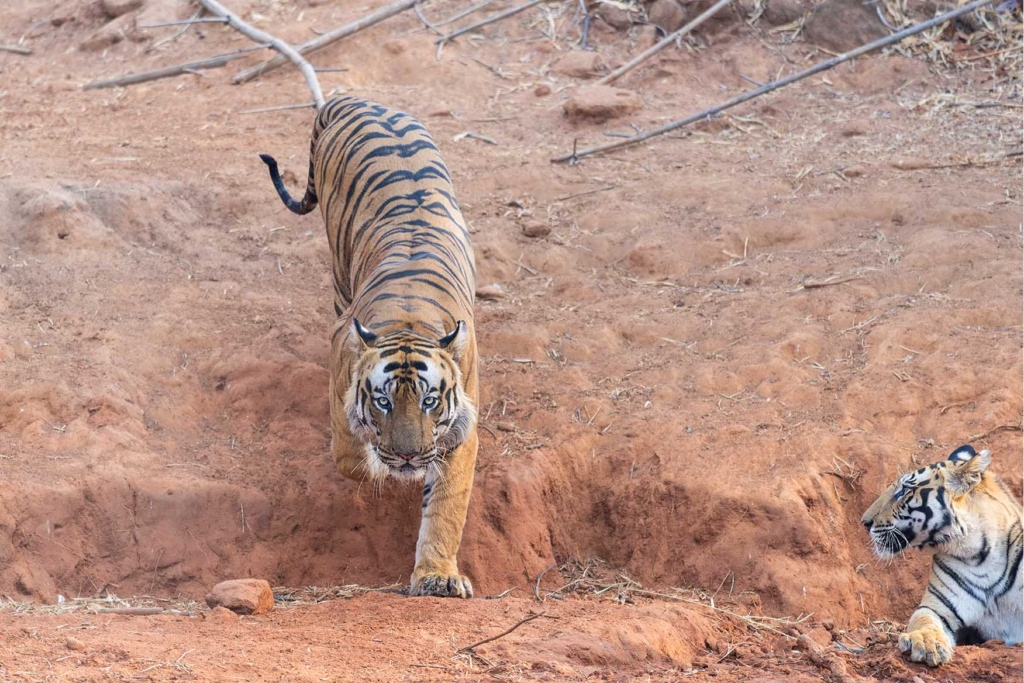
The Ultimate Guide to India’s Most Thrilling Wildlife Experience
Somewhere in the dry deciduous forests of eastern Rajasthan, a tigress pauses on a crumbling battlement, surveys her ancient kingdom, and disappears into the teak. This is Ranthambore — where history and wilderness collide in the most dramatic wildlife spectacle in all of India.
Ranthambore National Park is not simply a wildlife destination. It is a theatre of nature, a place where the ruins of a 1,000-year-old fort loom over waterholes, where crocodiles bask beside Mughal pavilions, and where the Royal Bengal Tiger walks with a confidence born of millennia. For anyone serious about a tiger safari in India, Ranthambore is, quite simply, where the story begins.
This guide covers everything you need to plan your trip — from safari zones and booking strategy to the best time to visit, what to pack, and how to maximise your chances of witnessing a tiger sighting that will stay with you for life.
Why Ranthambore Is India’s Premier Tiger Destination
India has dozens of tiger reserves — Bandhavgarh, Kanha, Corbett, Tadoba — each with its own character and devoted following. So what sets Ranthambore apart? The answer lies in a rare convergence of factors that no other park can quite match.
First, the landscape. Ranthambore spans roughly 1,334 square kilometres of rugged terrain: dry deciduous forests, open grasslands, rocky ridges, and three spectacular lakes — Padam Talao, Raj Bagh, and Milak Talao — that act as magnets for wildlife, particularly during the scorching summer months. The topography means tigers are frequently spotted in open terrain, giving photographers and wildlife enthusiasts the kind of unobstructed sightings that are rare in denser jungle parks.
Second, the backdrop. The 10th-century Ranthambore Fort, a UNESCO World Heritage Site, rises dramatically above the forest floor. It is not unusual to spot a tiger stretched out in the shade of an ancient stone wall, or a leopard slinking past a Mughal-era cenotaph. This visual drama elevates every safari into something that feels almost cinematic.
Third, the tigers themselves. Ranthambore’s tigers are famously bold and habituated to the presence of safari vehicles. Legendary individuals like Machli — once called the Lady of the Lakes — became among the most photographed tigers on earth. Today, the park supports an estimated 70 to 80 tigers, and sighting rates consistently rank among the highest in the country.
To watch a Royal Bengal Tiger emerge from the treeline at dawn, cross an open glade, and drink from a still lake with complete indifference to your presence is one of the defining experiences a traveller can have anywhere on earth.
Understanding the Safari Zones
Ranthambore is divided into ten numbered safari zones, each with its own character, terrain, and tiger population. The Supreme Court of India mandates a strict quota of vehicles per zone per session to minimise ecological disturbance — which is also why advance booking is essential.
Zone 1 covers the Padam Talao lake area, fort ruins, and open meadows, and consistently produces very high tiger sighting rates. Zone 2 encompasses the Raj Bagh ruins, dense woodland, and lakeside terrain, also with high sighting frequency. Zone 3 features rolling terrain and mixed vegetation in open areas and is similarly productive. Zone 4 has thicker forest cover and is better suited to leopard and sloth bear sightings, with medium tiger activity. Zone 5 offers diverse habitat and is excellent for birdwatching, again with medium tiger sighting rates. Zones 6 through 10 are buffer zones with dense cover, a wilder and less crowded experience, and varied tiger activity depending on resident tigers in the area.
Zones 1, 2, and 3 form the heart of the core area and consistently produce the best tiger sightings. If you have only one or two safaris, prioritise these zones without hesitation. The buffer zones offer a wilder, less crowded experience — with lower but not negligible tiger sighting rates.
Pro tip: when booking, request Zone 1, 2, or 3 specifically. Booking platforms allocate zones at the time of reservation — don’t leave it to chance. A morning slot in Zone 1 during February or March is among the most coveted bookings in Indian wildlife tourism.
Safari Types: Gypsy vs Canter
Two types of vehicles operate inside the park, and the choice between them meaningfully affects your experience.
The Gypsy is a six-seater open-top jeep and the gold standard for tiger safaris at Ranthambore. It is nimble, quiet, and allows far greater photographic flexibility than the larger vehicle alternative. With only six passengers, the experience is intimate, and your naturalist guide can stop precisely where needed without the cumbersome logistics of a larger group. If budget allows, always choose a Gypsy.
The Canter seats 20 passengers and is a more affordable option. It accesses the same zones as the Gypsy but is slower to manoeuvre and creates more noise. For budget travellers, families with young children, or those travelling in large groups, the Canter remains a worthwhile experience — tiger sightings are entirely possible, and the savings are significant.
Safaris run in two daily sessions. The morning safari departs at sunrise, roughly 6 to 7 AM depending on the season, offering cooler temperatures, more active wildlife, and beautiful golden light for photography. The evening safari departs around 2:30 to 3 PM and is excellent for activity near waterholes, with tigers often moving in the late afternoon.
The Best Time to Visit Ranthambore
The park is open from October through June, closing during the monsoon season (July to September) when heavy rains make forest tracks impassable and wildlife disperses widely. Within the open months, conditions vary dramatically — and timing your visit intelligently can make the difference between a good safari and an extraordinary one.
October and November mark the reopening of the park after the monsoon. The vegetation is lush and the grass is high, making tigers harder to spot, but the atmosphere is beautiful and the park feels refreshed. Sighting rates are moderate.
December through February is peak season. Cool, clear days, excellent winter bird migration, and strong tiger activity make this the most popular period. Book well in advance — months ahead for Zones 1 to 3.
March through May is the best period for tiger sightings. The heat forces tigers to the waterholes, the vegetation thins dramatically, and open-ground sightings become frequent. Temperatures regularly exceed 40°C, but for serious wildlife enthusiasts, this discomfort is entirely worthwhile. Many seasoned safari-goers consider April their preferred month.
June is extremely hot, sometimes exceeding 45°C, and the park closes in late June. Conditions are harsh, but dedicated visitors can still encounter tigers near permanent water sources.
The consensus among naturalists is that March through May offers the highest sighting probability of the year. December through February offers the most comfortable experience. Either is a sound choice depending on your priorities.
How to Book Your Safari
Booking Ranthambore safaris requires advance planning, particularly for peak season. The official booking portal is managed by the Rajasthan Forest Department, and this is where the majority of permits are released. A portion is also available through registered hotels and licensed tour operators.
The Forest Department releases safari permits via its official website approximately 90 days in advance for some slots and 45 days for others. Permits sell out rapidly for Zones 1 to 3 during peak season — desirable morning slots can be fully booked within minutes of release. Set a reminder, log in early, and have all your details ready.
Many lodges and resorts near Ranthambore have allotted permit quotas from the Forest Department. Booking through your hotel simplifies logistics considerably, and good properties actively monitor cancellations and secure additional permits when they become available. For first-time visitors, this approach is recommended.
Permits are returned to the booking pool when cancelled. Checking the portal early in the morning, particularly 48 to 72 hours before your preferred date, often reveals availability that wasn’t there the previous day.
Every individual in the vehicle requires a valid government-issued photo ID. Foreign nationals need their passport. Children under five are generally not permitted on safaris. Safari fees are separate from the park entry fee — budget for both. A naturalist guide is compulsory and will be assigned to your vehicle.
Wildlife Beyond the Tiger
Ranthambore sustains an extraordinary breadth of wildlife that rewards attentive observation even on tiger-less days — which are, in any case, increasingly rare.
Leopard: Ranthambore has a healthy leopard population, and sightings are more common here than in many Indian parks. They are most often spotted in the rocky, hilly zones in the early morning. Sloth Bear: one of the park’s more charismatic residents, sloth bears are seen with pleasing regularity, particularly near termite mounds. Striped Hyena: present and occasionally sighted in the buffer zones at dusk. Jackal, Mongoose, and Wild Boar: ubiquitous and charming in their own right, these animals provide constant movement around the waterholes.
The park’s reptile life is remarkable. Mugger Crocodiles are everywhere near the lakes, often in extraordinary numbers — basking on the banks of Padam Talao against the backdrop of the fort. Indian Soft-shell Turtles are also present in the waterbodies.
For birdwatchers, Ranthambore is a genuine destination in its own right. Over 300 species have been recorded, including the Painted Stork, Indian Eagle-Owl, Crested Serpent Eagle, Indian Courser, and numerous raptors. Winter brings migratory waterfowl in substantial numbers to the lakes.
Where to Stay

Accommodation near Ranthambore ranges from genuine luxury to comfortable budget guesthouses. Most hotels cluster along the road between Sawai Madhopur railway station and the park gates.
Several exceptional wildlife lodges operate in the buffer zone, offering the advantage of waking up surrounded by forest and having their own permit allocation. Properties like Aman-i-Khás and Oberoi Vanyavilas represent some of the finest wildlife accommodation in Asia, pairing extraordinary design with superb naturalist expertise.
A strong selection of well-run mid-range lodges and heritage hotels caters to travellers looking for comfort without the luxury price tag. Many are family-owned, with hosts deeply connected to local conservation and natural history.
Sawai Madhopur town, 12 kilometres from the park gate, offers a range of budget guesthouses for independent travellers. Staying closer to the park gates saves considerable time on safari mornings, when vehicles must queue. Properties more than 10 kilometres from the gate can mean a 4 AM wake-up for a 6 AM safari start.
Getting to Ranthambore
Sawai Madhopur is a major railway junction on the Delhi–Mumbai main line, with regular services from Delhi (approximately 4 to 5 hours), Jaipur (2 hours), and Agra. The Rajdhani Express and several Shatabdi services run this route. Train is widely considered the most comfortable and reliable option.
By road, Ranthambore is approximately 180 km from Jaipur (around 3.5 hours) and 400 km from Delhi (5 to 6 hours). Many visitors hire private cars or use intercity bus services from Jaipur.
The nearest commercial airport is Jaipur International Airport, approximately 3.5 hours away. Delhi’s Indira Gandhi International Airport is the main international entry point, typically 5 to 6 hours by road or 4 to 5 hours by train.
What to Pack
Neutral, muted clothing in khaki, olive, or beige — avoid white and bright colours. Layers for early mornings from November through February, when dawn temperatures can be surprisingly cold. A wide-brimmed hat and high-SPF sunscreen for summer visits. Binoculars, ideally 10×42, which transform the experience beyond recognition. A camera with a telephoto lens — 200 to 400mm minimum for wildlife photography. A water bottle, as the park is hot and dusty. A dustproof bag or camera cover for the very dusty tracks. Snacks for longer safaris. Your government-issued photo ID or passport. And patience — wildlife operates on its own schedule, and that is precisely the point.
Conservation: The Ranthambore Legacy
Ranthambore’s tigers nearly disappeared. By the 1970s, poaching and habitat destruction had reduced India’s tiger population to fewer than 1,800 individuals across the entire subcontinent. Project Tiger, launched by Prime Minister Indira Gandhi in 1973, identified Ranthambore as one of its original nine reserves, and the transformation has been remarkable.
From a handful of tigers in the 1970s, the park now supports a population in the 70 to 80 range. Satellite collaring programmes, active anti-poaching patrols, and community engagement around the park boundaries have all contributed to this recovery. Ranthambore has become one of the most cited examples of successful large carnivore conservation in the world.
Safari tourism plays a direct role in this success. Revenue from permits funds both park management and community development initiatives in surrounding villages. When you book a safari, you are participating directly in the economics of conservation.
The behavioural rules on safari are not merely etiquette — they are ecological imperatives. Remain seated at all times while inside the park. Never offer food to animals. Maintain silence near sightings. Follow your naturalist guide’s instructions without question.
Planning Your Visit: A Summary
Book safari permits as far in advance as possible — 90 days ahead for peak season slots in Zones 1 to 3. Aim for a minimum of three to four safari sessions across your stay. Pair morning and evening sessions on consecutive days to observe how tiger territories shift with the light and temperature.
Beyond the safaris, allow time to explore the Ranthambore Fort itself. The battlements look out over the forest below, and on a clear winter morning, the sight of mist rising from Padam Talao with the Aravalli hills beyond is as quietly magnificent as anything the park offers.
Come prepared, come patient, and come with an open mind. Ranthambore does not always deliver the postcard tiger in golden light — but it consistently delivers something more valuable: a genuine encounter with wildness, history, and a landscape that feels utterly, irreplaceably alive.
The tiger will find you when she is ready.
Keywords: Ranthambore tiger safari, Ranthambore National Park, tiger safari India, wildlife safari Rajasthan, Bengal tiger sighting, Ranthambore safari booking, best time to visit Ranthambore, Project Tiger India, Sawai Madhopur wildlife, Ranthambore safari zones